
Our emotions, thoughts, and experiences—and how we cope with them—influence our daily life, relationships, and physical health. The way we respond to life’s challenges and develop healthy habits is what we call behavioral health.
Spurwink responds to community needs in Maine by providing behavioral health care, substance use disorder services, and support services for people of all ages, abilities, and backgrounds, and their families. We help people lead engaged, connected, and meaningful lives in their communities. Connect with us to learn how you can get support.
Read on to learn more about what behavioral health is, why it’s important, and how we work to improve behavioral health outcomes.
What is behavioral health?
Behavioral health is defined as the state of mental, emotional, and social well-being that affects your overall wellness. It’s an important component of your overall health, as your actions, thoughts, emotions, and behaviors can impact health—including mental illness, substance use, and physical illness.
As an umbrella term, behavioral health encompasses topics like mental health, self-harm and suicide, substance use, life stressors, traumatic events and crises, and stress-related physical symptoms. Behavioral health care is the prevention, assessment, diagnosis, and treatment of these conditions.
Why behavioral health matters
Behavioral health is important because of the role it plays in your overall well-being. It influences the relationships you foster, the daily challenges you encounter, and the health of your body.
How you handle stress, emotions, and other challenges can affect the habits and choices—behaviors—you perform. If you encounter certain difficulties, without intervention or treatment, you could develop unhealthy coping mechanisms, such as self-harm or substance use, which can contribute to physical or mental health conditions, strain your relationships, or impact your ability to perform daily tasks.
When you prioritize your behavioral health by taking care of yourself—and getting professional care if needed—you can build healthier habits, improve your relationships, and support your overall well-being.
Behavioral health and suicide
Suicide is one of the leading causes of death in the US. Though there are other risk factors, too, about 49% of people who die by suicide have a history of a diagnosed mental health condition.
If you are experiencing suicidal thoughts, there are several ways you can get support. Behavioral health care is paramount in suicide prevention. Call 911 if you are in a life-threatening situation, call 988 if you are suicidal or experiencing emotional distress, or see other ways to get urgent behavioral health support.
Behavioral health and substance use
Sometimes, people turn to drugs, alcohol, or other substances to cope with stress, trauma, and other mental health conditions. Unfortunately, this can lead to the development of substance use disorders, which can result in overdose. In the US, overdoses remain the leading cause of death for people ages 18-44.
Treating and preventing substance use is part of behavioral health care. Connect with Spurwink to learn how you can get support for yourself or a loved one facing substance use.
Improving behavioral health outcomes
There are several types of behavioral health treatment that are proven to help prevent suicide and substance use and encourage healthy habits. Treatment options include:
- Counseling and therapy, provided by a licensed professional, such as a psychologist, counselor or social worker
- Medication management, typically provided by a psychiatric provider alongside therapy
- Support groups, led by professionals or peers who share similar experiences
- Crisis intervention, facilitated by hotlines, emergency services, and crisis centers
- Care coordination, provided by case managers or health home care coordinators
To improve behavioral health outcomes, we need to address the social determinants of health—supporting healthy environments in which we live, work, learn, and play. In addition, behavioral health clinicians must work together with primary care teams and other health professionals in order to provide patient-centered care.
Compassionate behavioral health care in Maine
Following evidence-based practices, Spurwink clinicians provide person-centered behavioral health care. We focus on fostering growth and recovery, helping people improve health and wellness, lead self-directed lives, and reach their full potential.
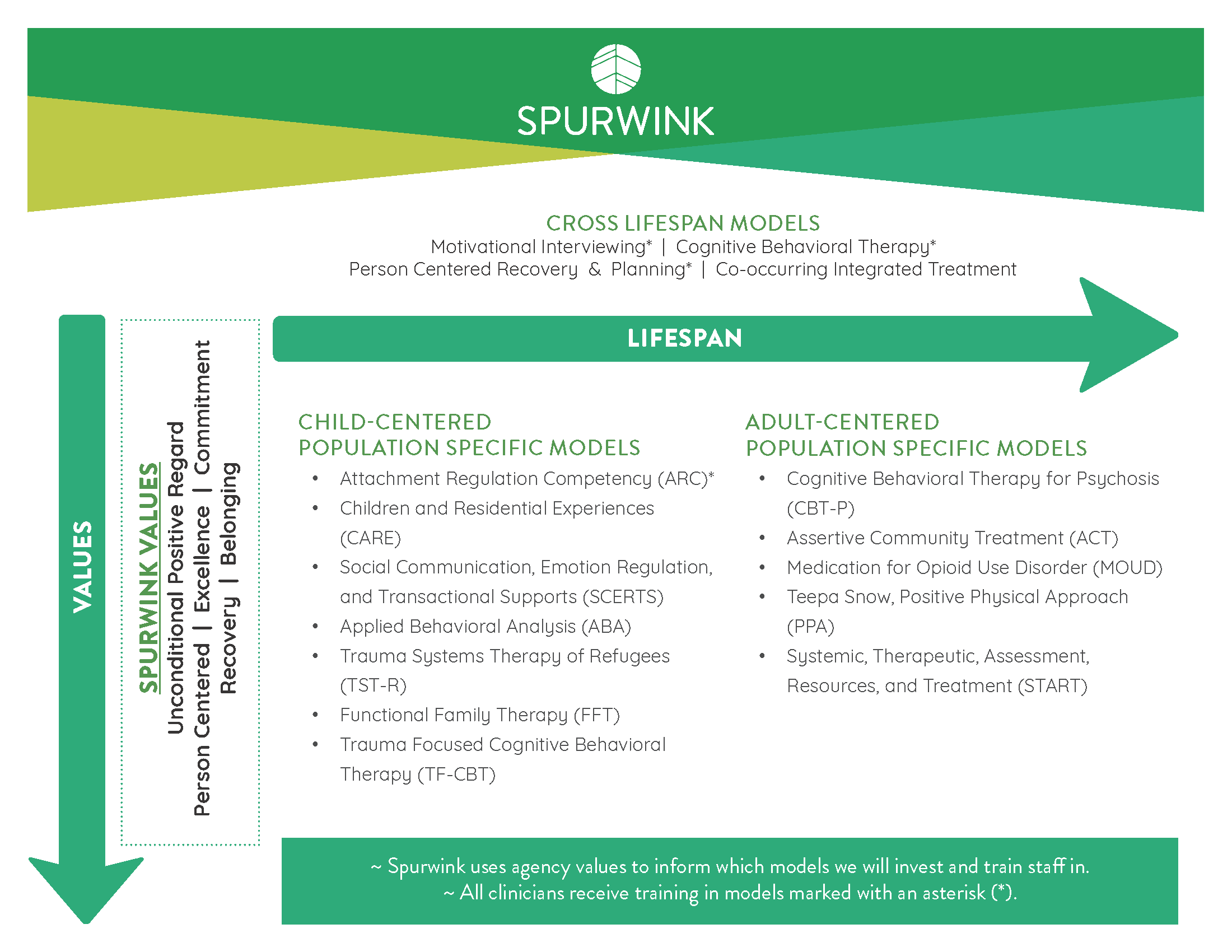
Spurwink’s behavioral health care clinical practice model.
More than 10,000 individuals benefited from our programs in Maine just this year—let us help guide you along your behavioral health journey.
