
Known officially as autism spectrum disorder (ASD), autism is a lifelong neurodivergence and developmental difference that affects how people think, experience the world, and interact with people.
While it is considered by many to be a disability, some autistic people prefer not to call autism a disability, but a neurodivergence—rather, according to the social model of disability, they are disabled by the societal barriers they face.
People with autism may feel things and react to them differently than non-autistic people. This can involve socializing being confusing or exhausting, getting overwhelmed or overstimulated, having intense interests, using repeated movements or actions, preferring order and routine, and masking discomfort to fit in with others.
Autism is understood as a spectrum—but this doesn’t mean there’s a straight line between being “more” or “less” autistic. Each autistic person possesses a unique combination of characteristics and experiences differing strengths and challenges.
It’s important to understand that autism is NOT a learning disability or mental health condition. However, around 1/3 of autistic people also have a learning disability, and autistic people are more likely to experience mental health conditions like anxiety and depression.
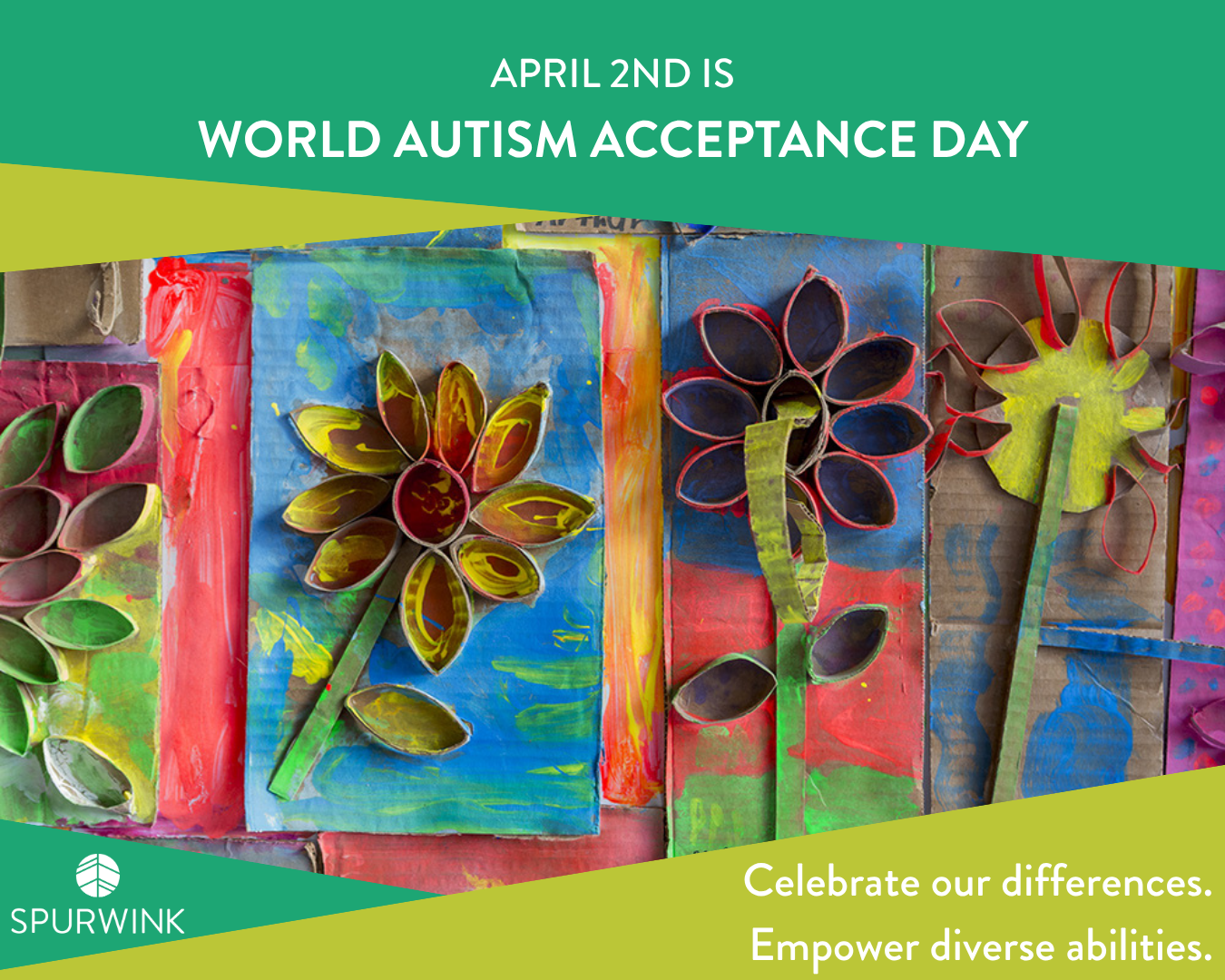
In April, we celebrate Autism Acceptance Month—helping spread awareness of the fact that autism is a natural, normal variation in people. It doesn’t look the same for each individual, which is why we refer to it as a spectrum. It’s a part of neurodiversity, which brings unique challenges but also strengths.
How Common is Autism?
According to the CDC, in the U.S., about 1 in 31 children have been identified with ASD—that’s about 3.2% of children.
People of all ages, genders, and ethnicities can be autistic, though many populations face barriers to getting a diagnosis due to lack of awareness.
Symptoms of Autism
Signs and symptoms of autism include differences in communication, intense interests, repeated movements and behaviors, and sensory processing differences.
In order to be diagnosed with autism, individuals must display characteristics such as these:
- Different communication styles, skills, and preferences—autistic people may use and understand words, tone of voice, and body language differently
- Focused, dedicated interests, like a strong passion for a hobby, media, toy, or academic subject
- Repeated movements or behaviors, like hair twirling, spinning, or listening to the same thing on repeat
- Preference for order, predictability, and routine—some autistic people want to know in detail what’s going to happen, rules to be the same for everyone, or to have the same meals each day
- High or low sensitivity to sights, sounds, touch, tastes, or smells, or different experiences with balance, movement, spatial awareness, or awareness of internal states like hunger or temperature—while some autistic people may be very sensitive to some kinds of sensory input, they may be not at all sensitive to others
Symptoms of autism don’t present the same way in everyone. Many autistic people, especially women and girls, “mask” or cover up their symptoms to try to fit in with others, at work, school, or other social settings.
Co-occurring Conditions with Autism
People with autism sometimes have comorbidities, or co-occurring conditions. Common comorbidities with autism include:
- Anxiety
- Depression
- Epilepsy
- Gastrointestinal and immune function disorders
- Metabolic disorders
- Sleep disorders
Why are Some People Autistic?
Scientific evidence suggests that autism is genetic—passed down from parents to children. Most likely, it is caused by multiple genes, rather than a single gene.
There is no evidence that vaccines or acetaminophen (Tylenol) causes autism. There is also no evidence that autism can be acquired—it is not caused by parenting in a particular way.
It’s also key to understand that autism can’t be “cured”—if you are autistic, you have a lifelong neurodivergence. But there are ways people with autism can get psychological, social, and educational support.
Getting Treatment and Support for Autism
Health care professionals look for signs of autism in children at regular well-visit checkups. They will refer parents to a specialist if their child shows symptoms.
There’s no cure for ASD and no one-size-fits-all treatment. But mental and behavioral health care professionals can support learning, development, and behavior for children with autism. Teens and adults with autism can also get psychological and social support to help them succeed in school, careers, relationships, and everyday life.
Getting treated early—like during the preschool years—can help a child with autism learn critical social, communication, functional, and behavioral skills. Some types of treatments for autistic people include:
- Behavior and communication therapies
- Educational therapies
- Family therapies
- Occupational or physical therapies
- Speech therapies
- Medications to help manage certain symptoms or comorbidities (like hyperactivity, behavioral symptoms, anxiety, depression, or ADHD)
Spurwink—Treatments and Support for Autism in Maine
Spurwink serves individuals with autism spectrum disorder, providing adults, children, and families across Maine with an array of services, tailored to both youth and adults. Through a focus on the development of the whole person, attention to strengths, and recognition of unique needs, every child and adult with autism or intellectual disabilities is given the opportunity to realize their fullest potential and can lead healthy, engaged lives in their communities.
Autism support services Spurwink provides include consultation, case management, community support, outpatient therapy, educational services, and residential treatment, at locations throughout Maine.
Interested in Spurwink’s services? Contact us through our online form or call (207) 871-1200.
